ECOMMERCE SEO FOR CATALOGS THAT SELL ON GOOGLE, MARKETPLACES, AND IN AI ANSWERS
Category architecture, product schema, faceted navigation fixes, and internal links that make a catalog crawlable. Built for Shopify, WooCommerce, and BigCommerce stores from 200 to 200,000 SKUs.
Your catalog is bigger than the traffic it earns
Category pages compete with their own filtered variants, and Google indexes the wrong one
Faceted URLs burn crawl budget on combinations nobody searches for
Product pages have no schema, so they lose rich results to marketplaces
Collection copy is three words and a product grid, which is not a ranking page
Blog posts outrank your own category pages for category-level searches
Internal links point at the homepage instead of the page that should rank
App-generated pagination creates duplicate content faster than you can fix it
Architecture first, content second, links throughout
Ecommerce SEO fails when it starts at the keyword list. It works when it starts at the catalog: which pages should exist, which should be canonical, which should never be crawled, and how the whole thing links together so Google spends its budget on pages that make money.
We map every template, score it by revenue at risk, then fix in that order. The same work makes the catalog readable to AI shopping surfaces, because extractable structure is what both systems reward.
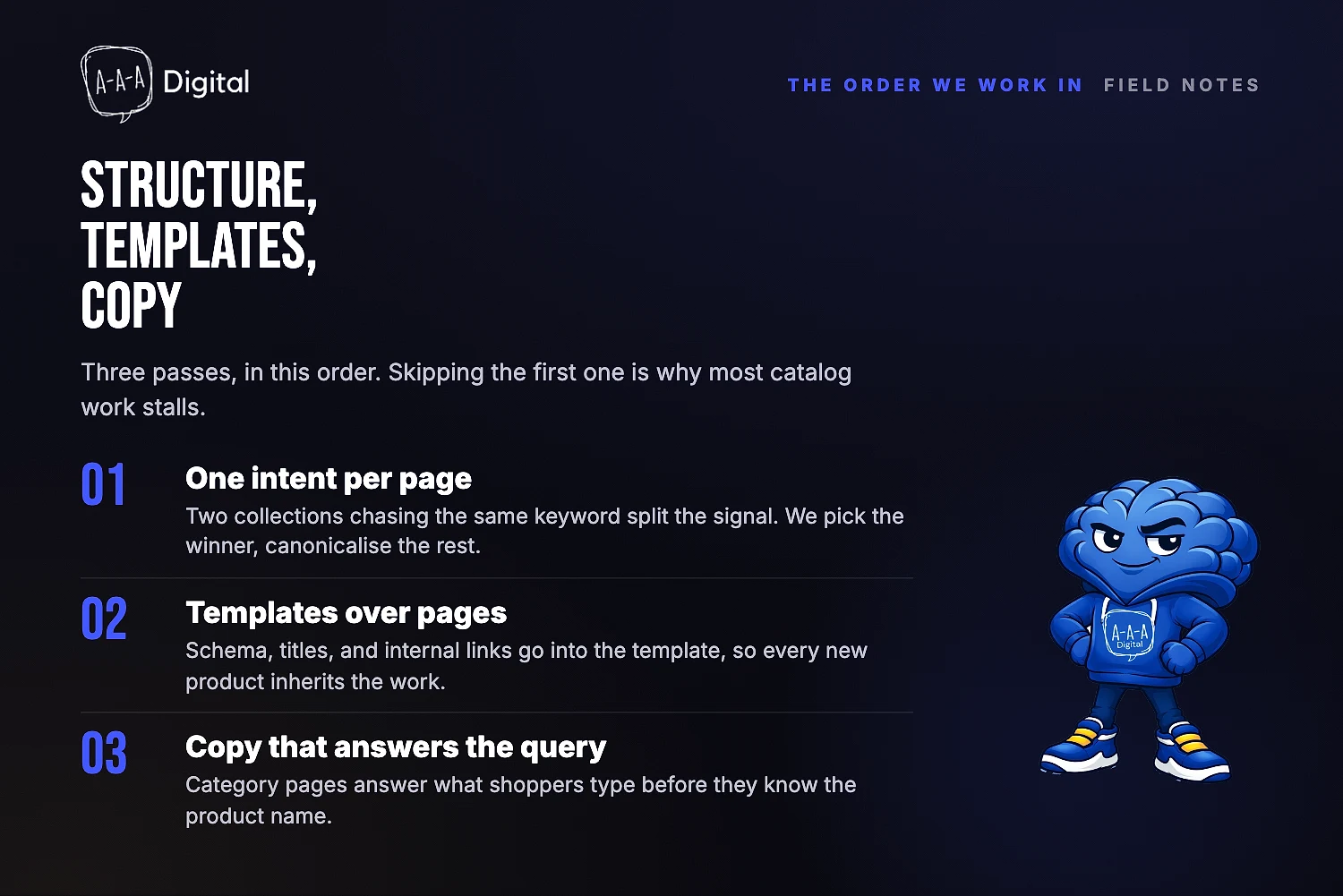
Catalog architecture and intent mapping
One page, one search intent. We map categories, subcategories, and the guides that support them, then cut the overlap that makes two pages compete for the same query.
Faceted navigation and crawl control
Filter and sort URLs get canonicalised, parameterised, or blocked, whichever keeps the useful combinations indexable and the junk out. Log-file checks confirm Google actually spends its budget where you want.
Product and category templates
Titles, descriptions, schema, and internal links built into the template so every new product inherits the work instead of needing an audit.
Category content that ranks
Copy written for the buyer at that level of the funnel: selection guidance, comparisons, and the details shoppers search for before they know the product name.
Internal linking model
A repeatable rule set for linking products to categories, categories to guides, and guides back to the pages that convert. No more orphan SKUs.
Schema and rich result coverage
Product, Offer, Review, FAQ, and Breadcrumb markup validated across the catalog, with error monitoring so coverage does not quietly rot.
Measurement by template
Reporting grouped the way the site is built, so you can see which page type earned the revenue instead of guessing from a sitewide average.
Results that speak for themselves
Every figure below comes out of the client's own analytics, not a slide.
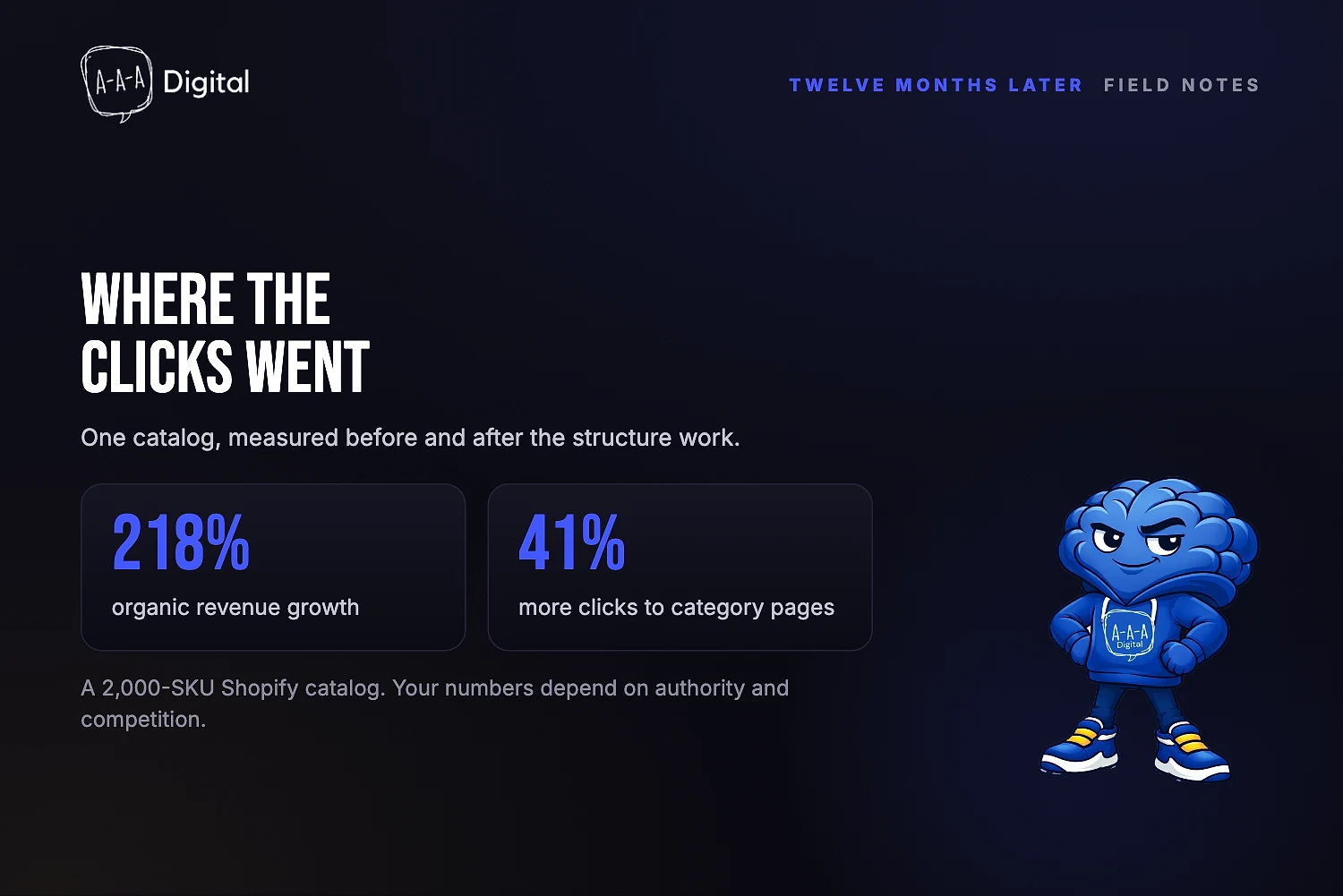
218%
Average organic revenue growth
96%
Product pages eligible for rich results
41%
More clicks to category pages
184
Collections indexed and earning
6 mo
To compounding organic revenue
180+
Catalogs audited
How it works
Catalog audit and intent map
Full crawl, Search Console export, and log analysis. We group every URL by template, measure what each template earns, and map the queries each page should own.
Architecture and technical fixes
Canonicals, pagination, facet handling, sitemaps, and redirects. The crawl gets clean before anything new is published.
Template and content build
Product and category templates do the heavy lifting, then the top-revenue categories get content and links that earn the ranking rather than borrow it.
Authority and iteration
Internal link passes, digital PR, and monthly iteration on the pages closest to page one. Reporting ties every change to revenue by template.
Related services
Grow your store with our other Shopify services
Shopify SEO
We don't just drive traffic. We rank your Shopify store for high-intent buyer keywords that convert into revenue. Techni…
Explore our shopify seo servicesShopify CRO
Data-driven conversion rate optimization for Shopify stores. We identify friction points, run A/B tests, and implement c…
Explore our shopify cro servicesShopify Migration
SEO-preserving migrations from WooCommerce, Magento, BigCommerce, and custom platforms. Zero downtime. Full data integri…
Explore our shopify migration servicesFrequently asked questions
The practice of making an online store's catalog rank and convert in organic search. It covers category architecture, product page optimization, faceted navigation, schema, internal linking, and the content that supports buying decisions.
Find out which pages are leaking revenue
Book a free catalog audit. We'll score every template by traffic at risk and show the fix order before you spend a dollar.
Book My Free Strategy CallNo commitment. No sales pitch. Just pure strategy.