AN SEO AUDIT THAT ENDS IN A FIX ORDER, NOT A 400-ROW SPREADSHEET
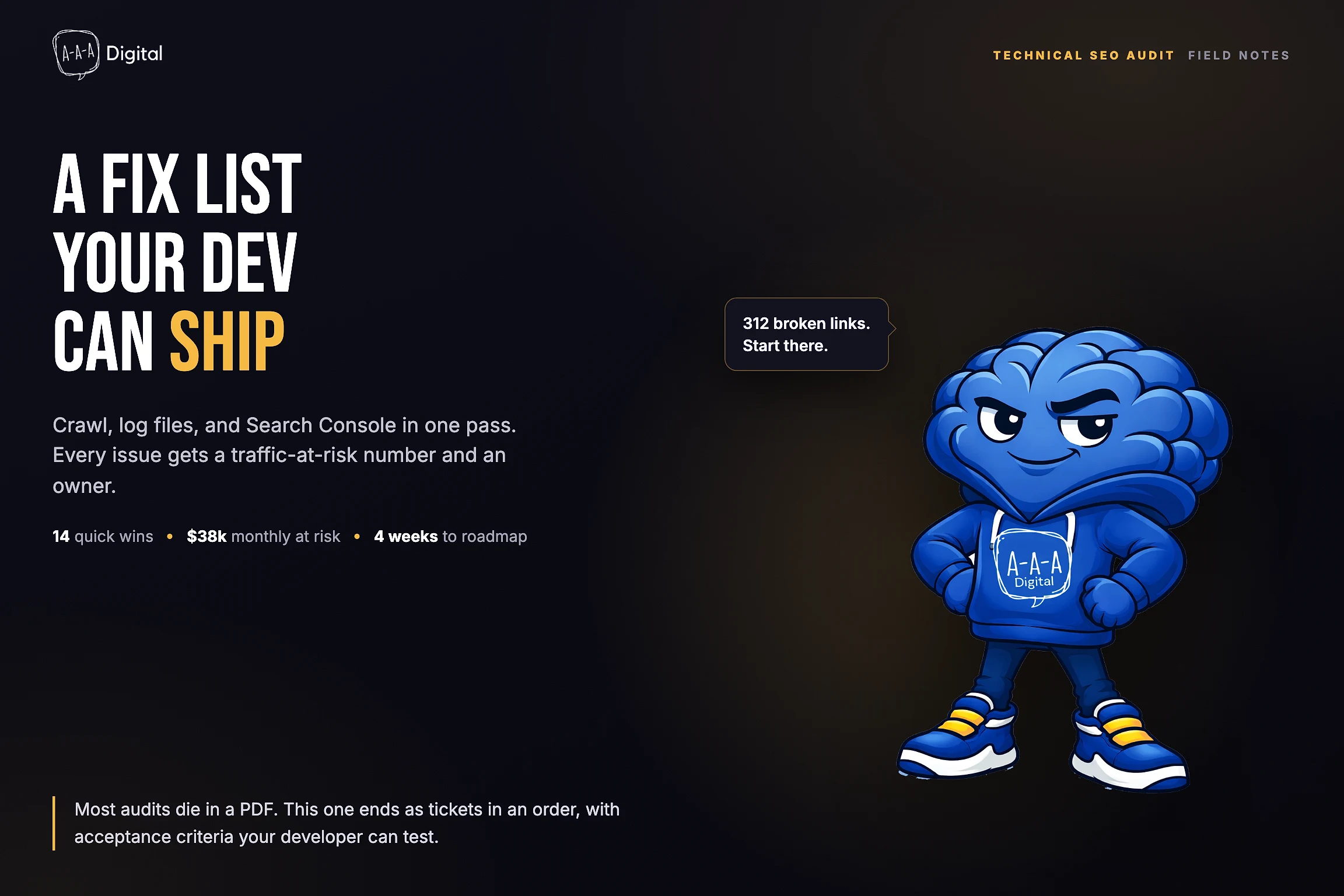
Crawl, Search Console, and log data scored by template, then ranked by revenue at risk and effort. Your developer gets tickets they can action; you get a number for what is leaking.
You have the audit. You do not have the order
A 400-row spreadsheet where every issue is marked critical
Agencies report problems they cannot fix and developers who do not read SEO docs
No revenue framing, so nobody can justify the sprint
Issues fixed once and quietly reintroduced by the next theme or app update
Core Web Vitals reported from lab data nobody can reproduce
No owner, no dates, and no way to tell whether anything worked
Score by template. Rank by money. Hand over tickets.
Most audits fail at the handoff. Ours is built for the person who has to do the work: grouped by template so one fix covers 400 URLs, ranked by traffic at risk so the first sprint is obviously worth it, and written as tickets with acceptance criteria.
You get the diagnosis, the order, and the evidence to check it afterwards.
Crawl, logs, and Search Console
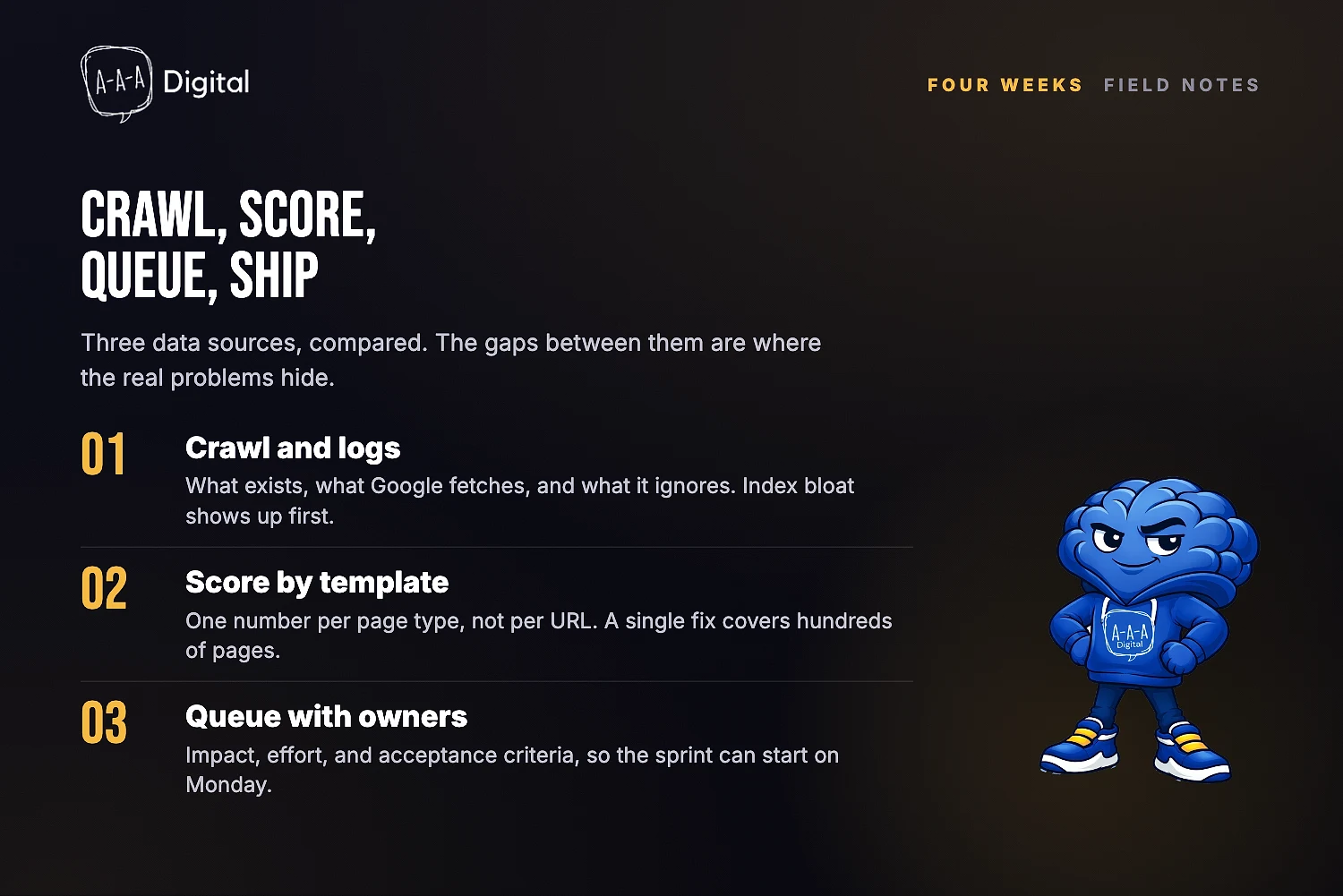
Three sources, not one. What exists, what Google actually fetches, and what it reports as indexed or excluded. The disagreements between them are where the real problems hide.
Template-level scoring
Issues grouped by page type with traffic and revenue attached, so fixing one template fixes hundreds of URLs instead of one.
Revenue at risk model
Impressions, click curves, and conversion value combined into a monthly number per issue. It is an estimate, and it is the estimate that gets budget approved.
Prioritised fix backlog
Impact versus effort, with quick wins separated out. You can ship the first three without waiting for a planning cycle.
Developer-ready tickets
Each fix written with the URL pattern, expected outcome, acceptance criteria, and a screenshot or sample. No translation layer needed.
Core Web Vitals from field data
CrUX and Search Console field metrics, not just Lighthouse scores, with the specific element causing the problem.
30-day verification
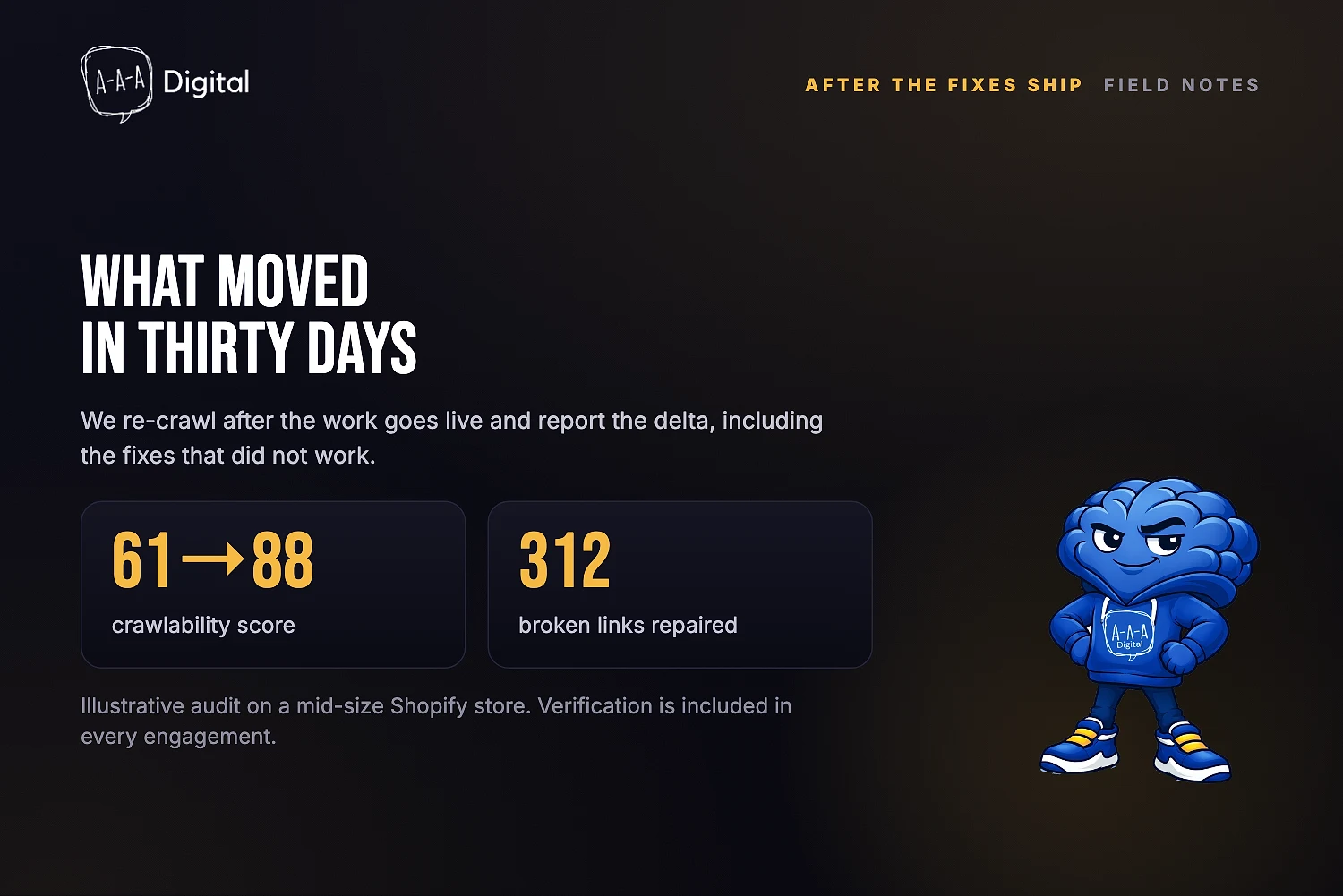
We re-crawl after the fixes ship and report what moved, what did not, and what to do about the difference.
Results that speak for themselves
Every figure below comes out of the client's own analytics, not a slide.
14
Average quick wins found
$38k
Typical monthly revenue at risk
4 wks
Audit to signed roadmap
1,500+
URLs crawled per audit
30 days
Post-fix verification included
$1,500
Starting price, fixed fee
How it works
Crawl and collect
Full crawl, log file sample, Search Console export, and analytics context. We check what exists against what earns.
Score by template
Every URL gets grouped into a page type, and every page type gets a health score and a revenue-at-risk figure.
Build the fix order
Impact versus effort, quick wins first, with owners and estimates. Delivered as a backlog, not a document.
Verify after shipping
Thirty days after fixes go live we re-crawl and report the delta, including the fixes that did not work.
Related services
Grow your store with our other Shopify services
SEO
Organic traffic that compounds month over month. Technical SEO, content strategy, and authority building, built for ambi…
Explore our seo servicesEcommerce SEO
Category architecture, product schema, faceted navigation fixes, and internal links that make a catalog crawlable. Built…
Explore our ecommerce seo servicesShopify SEO
We don't just drive traffic. We rank your Shopify store for high-intent buyer keywords that convert into revenue. Techni…
Explore our shopify seo servicesFrequently asked questions
Crawl analysis, indexation review, Core Web Vitals from field data, structured data coverage, internal link analysis, content and cannibalisation checks, and a prioritised fix backlog grouped by template.
Find out what your site is leaking
Book a free scoping call. We'll tell you whether you need a full audit or three quick fixes, and what it will cost either way.
Book My Free Strategy CallNo commitment. No sales pitch. Just pure strategy.