A DTC brand came to us last year spending $40,000 a month on Meta ads. They felt good about it. Revenue was growing. The founder told us their customer acquisition cost was "around $18," and that everything was fine.
It wasn't. When we pulled the real numbers, agency fees, app subscriptions, creative production, the discount codes eating into first-order margin, their true CAC was closer to $47. On a $52 average first order, they were paying customers to take product off their hands.
This is the most common conversation we have with store owners. Not rankings, not page speed. Math. Customer acquisition cost ecommerce founders quote from their ad dashboard is almost always wrong, and that wrong number quietly dictates whether the business lives or dies.
In this post, we'll show you how to calculate CAC the way an operator does, why paid-only CAC is a vanity metric, and which levers actually move the number down without tanking volume.
How to Calculate Customer Acquisition Cost the Right Way
The ad-platform version of CAC is simple: ad spend divided by new customers. Meta tells you this number in Ads Manager. It's also nearly useless on its own.
The full formula we use with every client:
CAC = (Total sales & marketing spend) ÷ (New customers acquired)
"Total sales & marketing spend" means:
- Ad spend across all platforms (Meta, Google, TikTok, affiliates)
- Agency or freelancer fees
- Creative production (photo shoots, video editing, UGC payments)
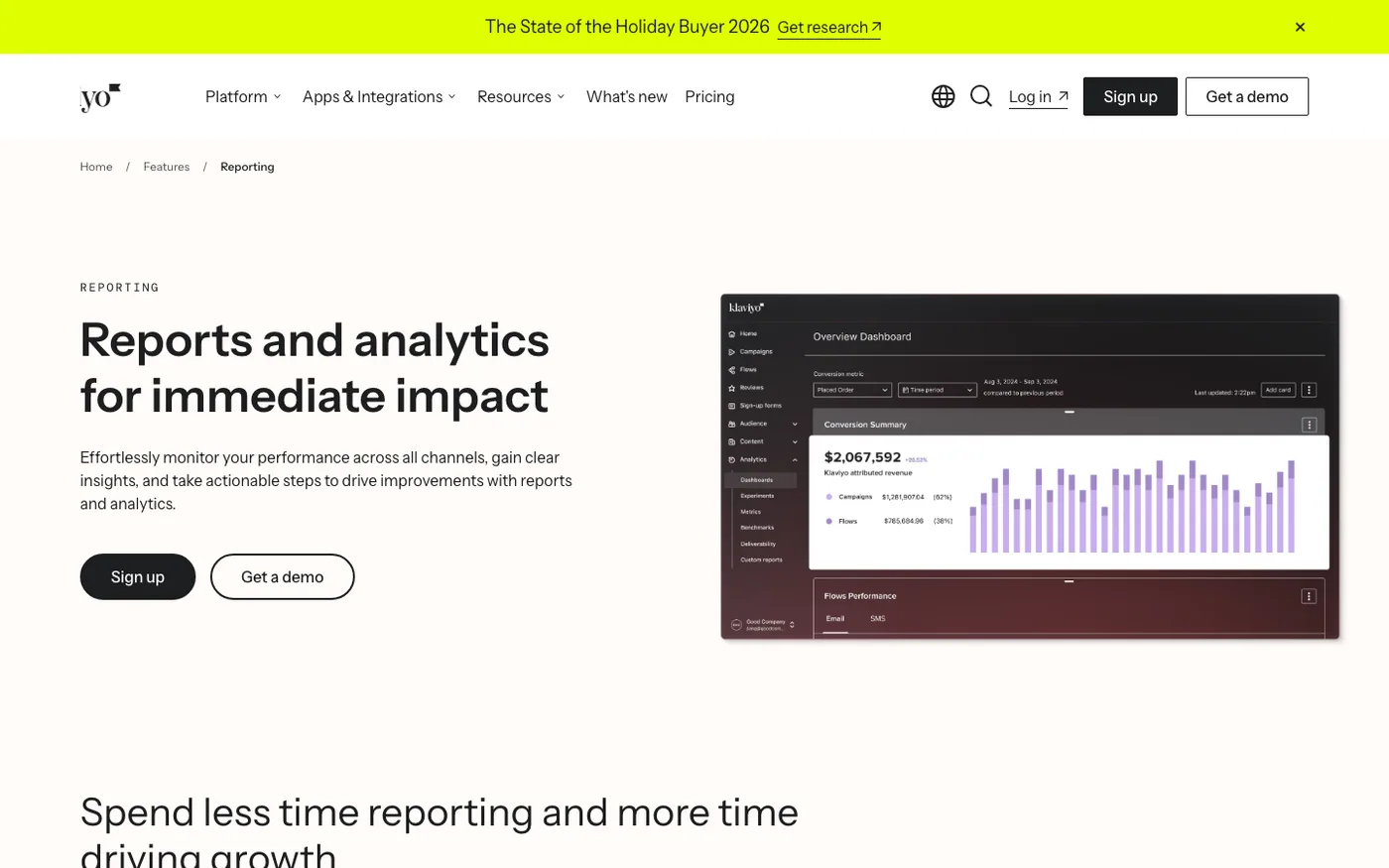
- Email/SMS platform costs (Klaviyo, Attentive) attributable to acquisition flows
- Discounts and incentives offered to first-time buyers
- Tools and software in your marketing stack
A realistic example. A store spends $20,000 on ads, $4,000 on an agency, $2,000 on creative, and $1,500 on first-order discounting in a month. They acquire 700 new customers. Ad-platform CAC says $28.57. Real CAC is $39.29. That gap changes every decision you make about scaling.
One nuance: attribution. A customer who clicked a Meta ad, then a Google brand ad, then bought from a Klaviyo flow gets claimed by three channels. Add up each platform's reported CAC and you'll get a number far below reality. This is why we track blended CAC, total spend over total new customers, as the source of truth, and use platform data only for directional decisions inside each channel.
Why Your CAC Is Higher Than It Was Two Years Ago
If your acquisition costs feel like they've crept up, they have. And it's not because your media buyer got worse.
Ad auction saturation. Meta and Google run on auctions. Every DTC brand that survived 2020 raised money and started advertising, which bid up the same audiences everyone was targeting. CPMs in competitive categories roughly doubled between 2021 and 2024, and they've kept drifting upward since.
Privacy signal loss. Apple's App Tracking Transparency changes gutted the pixel data Meta relied on for optimization. Less signal means worse targeting, worse lookalikes, and more spend wasted on people who were never going to buy. Advertisers compensate with broader targeting and higher budgets, which pushes auctions up further.
The discount treadmill. Aggressive welcome-offer popups, 15% off, 20% off, free shipping on first order, train customers to never buy at full price. If your popup converts at 8% but every one of those customers costs you a margin hit, you've raised your effective CAC while feeling like you're "converting better."
Creative fatigue, faster. Where an ad creative used to run profitably for months, we now see winning creative burn out in 3–5 weeks in most categories. That means constant production cost, and production cost is part of CAC whether you count it or not.
None of this is fixable with a bidding tweak. It means the strategy that worked in 2021, pour money into prospecting ads and let the pixel do the work, is structurally more expensive now. The brands holding their CAC steady have shifted where their customers come from.
The Levers That Actually Lower CAC
Ordered by impact for most stores we audit.
1. Email and SMS capture before you pay for the click
If you're paying Meta $30 to get a visitor to your site and 97% leave without buying, the cheapest CAC reduction available is converting more of that paid traffic into owned contacts. A well-built popup with a genuine incentive, hooked into a 3–4 email welcome flow in Klaviyo, typically converts 5–8% of anonymous visitors into subscribers.
Those subscribers then convert at a fraction of prospecting-ad cost over the following weeks. Every welcome-flow order is an order you didn't pay Meta for. This is the single highest-ROI fix we implement, and it's boring, which is exactly why so many stores skip it.
2. Referral and word-of-mouth programs
Referred customers arrive with trust pre-installed and convert at higher rates with lower incentive costs. A simple referral program, we usually set these up with a dedicated referral app or Klaviyo's native flows, turns your existing customers into a channel Meta can't tax. Even a modest referral share of new customers meaningfully drags blended CAC down.
3. Organic content that compounds
Paid ads are a faucet: money on, traffic on; money off, traffic off. SEO and content are a reservoir. We've written elsewhere about the ROI of Shopify SEO, the short version is that organic traffic has near-zero marginal cost per visitor once rankings are earned. Stores where organic drives 30–40% of sessions have structurally lower blended CAC than ad-dependent competitors, and it isn't close.
This takes 6–12 months to bite, which is why most founders quit. That's a mistake. Start the content engine before you need it, not after CAC forces the issue.
4. Conversion rate optimization
Here's the part people miss: your CAC is a function of your conversion rate. If you pay $3,000 for 1,000 visitors and convert at 2%, you paid $150 per customer. If CRO lifts that to 2.6%, you paid $115. Same ad spend, same traffic, 23% cheaper customers.
This is why we treat CRO and paid media as one system, not two services. A landing page rebuild, clearer offer structure, and a faster mobile experience routinely move conversion 20–40% for stores that haven't optimized in a while. Across the stores we've rebuilt, our Shopify CRO work has averaged a +58% conversion lift, and every point of conversion rate is a direct CAC reduction.
5. Retention economics (CAC pays for itself faster)
Strictly, retention doesn't lower CAC, it lowers the payback period, which is what actually kills brands. A customer acquired for $45 who buys twice more over six months costs you $45 once and returns $110 in margin. The same customer who never returns is a $45 hole in your P&L. If your repeat purchase rate is weak, no amount of ad optimization will save you.
CAC, LTV, and the Ratio That Matters
CAC on its own is half the story. The number that decides whether a brand is viable is the LTV:CAC ratio, customer lifetime value divided by acquisition cost.
Our working thresholds:
- Below 1:1: You're losing money on every customer. Stop scaling immediately and fix the unit economics.
- 1:1 to 2:1: Technically surviving, but fragile. One bad quarter or CPM spike breaks you.
- 3:1: Healthy. This is the target zone for most DTC brands.
- 4:1 and above: Strong, but sometimes a sign you're under-investing in growth. If customers are this profitable, spend more to get more of them.
LTV itself is easy to overstate. Don't use total revenue per customer, use contribution margin per customer (revenue minus COGS, shipping, payment processing, and returns) across a realistic window. We usually model a 12-month LTV, because projecting "lifetime" value for a brand that's three years old is fiction dressed up as a spreadsheet.
Also watch payback period: how many months until a customer has returned their acquisition cost in margin. Under 3 months is comfortable. Over 9 months is dangerous for any brand without deep cash reserves.
A Simple Monthly CAC Audit You Can Run Yourself
You don't need fancy tooling for this. An hour in a spreadsheet each month:
- Export total new customers for the month from Shopify (Customers segment: first order date in period).
- Total all sales and marketing spend, including fees and creative, not just ad spend.
- Compute blended CAC. Then compute it per channel using platform-reported conversions, accepting that channel numbers won't sum to the blended total.
- Compute 12-month LTV for the cohort acquired 12 months ago (so you have a full window of data).
- Calculate the ratio and the trend. Compare to last month and last quarter, not to benchmarks you read on Twitter.
Do this twelve times and you'll understand your business better than 90% of DTC founders. Trends beat snapshots. A rising CAC trend with flat LTV for three consecutive months is an alarm bell, act on it then, not when the bank account forces you to.
Frequently Asked Questions
What is a good customer acquisition cost for an ecommerce store?
There's no universal number because it depends entirely on your margins and repeat purchase behavior. A $40 CAC is excellent for a brand with $90 first-order margin and strong repeat rates, and fatal for a brand with $30 first-order margin and no retention. Judge CAC against your LTV and payback period, not against benchmarks.
Is CAC the same as CPA?
Close, but not identical. Cost per action (CPA) usually refers to the cost of any defined conversion, an email signup, a lead, a purchase, inside an ad platform. CAC specifically measures the cost of acquiring a paying customer with full marketing spend included. In practice, your platform CPA will always look better than your true CAC, which is why we recommend tracking blended CAC.
How often should I recalculate CAC?
Monthly, at minimum, with a quarterly deep review. Ad costs move weekly, so a number from six months ago is stale. We also recalculate after any major change, new agency, new channel, creative overhaul, because these shift spend in ways that the old baseline hides.
Does raising prices lower CAC?
Not directly, but it improves the economics around CAC by increasing margin per customer, which shortens payback period and improves LTV:CAC without acquiring a single extra customer. It's often the fastest fix for weak unit economics, though it needs testing, a poorly communicated price increase can hurt conversion enough to raise CAC indirectly.
Should I include agency fees in CAC?
Yes, always. If you exclude agency fees, creative production, and platform costs, you're measuring ad efficiency, not acquisition cost. Both numbers are useful, but only the fully-loaded one tells you whether the business model works.
Get Help With This
If you've done the math and your CAC is uncomfortably close to your first-order margin, that's fixable, but not by tweaking bids. Our team audits the full acquisition stack, from ad creative and landing pages to the welcome flows that recover paid traffic, and builds a plan to bring blended CAC down. See how our performance marketing team approaches it, or reach out for a CAC audit of your store.
