Ask a Shopify store owner how their email marketing is doing and you'll usually hear one of two answers: "We send a newsletter sometimes" or "We installed Klaviyo but never really set it up." Both mean the same thing, the store is leaving its highest-ROI channel on the table.
Here's a number that should get your attention: on stores we manage, Shopify email flows routinely generate 25–35% of total email revenue while accounting for a fraction of the sends. Not campaigns. Flows. The automated sequences that fire when a customer does something, signs up, abandons a cart, buys, goes quiet. They run whether you're working or not.
The problem is most guides list fifteen flows and leave you paralyzed. You don't need fifteen. You need six, built in the right order. This is the exact sequence we use when we set up Klaviyo for a Shopify store, and roughly the priority order that pays back fastest.
Flow vs. Campaign: Why the Distinction Matters
A campaign is a one-off send, your Black Friday blast, a product launch announcement. A flow is a triggered sequence: when a subscriber meets a condition, the sequence starts and runs on autopilot.
Campaigns are labor. Flows are infrastructure. You build a flow once, and it earns every day for two years with occasional tuning. When we audit a new client's Klaviyo account, flows are the first thing we check, because a store with strong flows and mediocre campaigns almost always outperforms the reverse.
One caveat before the list: flows amplify whatever traffic you have. If your site gets 200 visitors a month, a welcome flow won't save you. Flows convert existing demand into revenue; they don't create demand. That's what performance marketing is for.
The 6 Shopify Email Flows, in Build Order
1. Welcome Flow (build this first, always)
The welcome flow is triggered when someone joins your email list, usually through a popup offering a discount or a signup form in the footer. It converts the intent of a brand-new subscriber into a first purchase, and it's the highest-earning flow for most stores under $10M.
Our default structure is four emails over seven to nine days:
- Email 1 (immediate): Deliver the promised incentive, set expectations, show bestsellers. If you offered a code, make it absurdly easy to copy, one click on mobile.
- Email 2 (day 2): Your brand story and social proof. Why you exist, who you serve, a review or two.
- Email 3 (day 4): Handle the top objection. For consumables, it's usually ingredients or results. For fashion, fit and returns.
- Email 4 (day 7): Urgency. The incentive expires, stock is limited, whatever's honest. Then move non-converters into your newsletter segment.
Setup in Klaviyo: Flows > Create Flow > Welcome Series, trigger "Added to list" (your main newsletter list), with a conditional split for whether the subscriber has purchased. Buyers skip the discount-pressure emails and go into post-purchase instead.
2. Abandoned Cart Flow (the revenue rescue)
Roughly 70% of carts on Shopify are abandoned. A three-email abandoned cart sequence recovers a meaningful slice of them, typically 3–8% of abandoned checkouts, which on a busy store is real money every month.
Our structure:
- Email 1 (1–3 hours after abandonment): Friendly reminder, show the exact items left behind, big image, one button back to checkout. No discount yet.
- Email 2 (20–24 hours later): Social proof and objection handling. Reviews of the specific products, shipping and returns reassurance.
- Email 3 (24–48 hours later): Incentive if you can afford it. A 10% code or free shipping nudge. Add a conditional split so previous buyers and high-margin carts don't all get discounted.
In Klaviyo, use the Abandoned Cart pre-built flow with the "Checkout Started" metric and a split on "Placed Order zero since starting flow." Keep the delay short on email one, same-hour reminders dramatically outperform next-day ones.
3. Abandoned Browse Flow (for high-intent window shoppers)
Someone viewed a product three times but never added to cart. That's a warmer signal than casual browsing, and it deserves a nudge, but a gentle one. A single email, sent 3–4 hours after the session, featuring the viewed product plus two or three alternatives. No discount. This flow is volume-sensitive; on stores under ~10K monthly sessions it barely fires, so don't over-engineer it. Build it after the two flows above are proven.
4. Post-Purchase Flow (where retention is made)
Most stores send an order confirmation and then go silent until the next campaign. That's leaving repeat revenue, the cheapest revenue in ecommerce, uncollected.
Our post-purchase sequence:
- Email 1 (immediately after purchase): Confirmation, set expectations for shipping, thank them properly.
- Email 2 (delivery + 1 day): How to use/care for the product, plus a request to reply with questions. This email slashes "where is my order" support tickets.
- Email 3 (timing depends on product): Review request, timed to when the customer has actually experienced the product. Klaviyo's Shopify integration lets you trigger this off fulfillment status.
- Email 4 (repurchase window): For consumables, a replenishment reminder timed to typical usage, 30 days for supplements, 45 for skincare, whatever your data says. For durable goods, a cross-sell of complementary products.
If you only build one replenishment flow, make it this one. Increasing repeat purchase rate by even a few points compounds dramatically across your customer base.
5. Win-Back Flow (for customers going quiet)
A win-back flow targets past customers who haven't bought in a while, your definition of "a while" depends on your product cycle. For a coffee brand, 45 days. For furniture, 12 months. Start with 2–3x your average purchase interval.
Structure:
- Email 1: "We miss you" with your current bestsellers or what's new.
- Email 2 (5–7 days later): A real incentive to return. This is one of the few places we'd lead with a discount, these customers already know the brand, and reactivation is cheaper than acquisition.
- Email 3 (final, 5–7 days later): Last chance, honest tone. If they don't engage, suppress them from campaigns rather than burning your sender reputation by emailing ghosts forever.
That suppression step matters more than the emails. Klaviyo charges by active profile count, and a list full of dead contacts inflates your bill while dragging down deliverability.
6. Sunset Flow (yes, it earns by saving money)
The least glamorous flow on the list, and the one agencies skip. A sunset flow sends a final series to chronically unengaged subscribers, no opens in 90–120 days, asking them to stay on the list, and then suppresses the ones who ignore it.
Why it matters: Gmail and Yahoo's sender requirements now make engagement rates a hard deliverability factor. Stores that keep mailing dead contacts increasingly find their campaigns landing in spam for everyone, including their best customers. The sunset flow protects the deliverability that every other flow depends on.
The Order to Build Them (and Why)
Priority should follow revenue impact per hour of setup:
- Welcome, converts your existing signup traffic immediately
- Abandoned cart, recovers revenue you're already paying to generate
- Post-purchase, compounds through retention and reviews
- Win-back, reactivates your cheapest-to-win audience
- Abandoned browse, incremental, build when traffic justifies it
- Sunset, hygiene, but critical once your list passes ~20K profiles
Resist the urge to build all six in a weekend. Set the welcome flow live, watch its numbers for two weeks, then move on. Flows need tuning, subject lines, timing, splits, and you learn more from one tuned flow than six untouched ones.
Setup Notes From the Trenches
A few things that consistently trip people up:
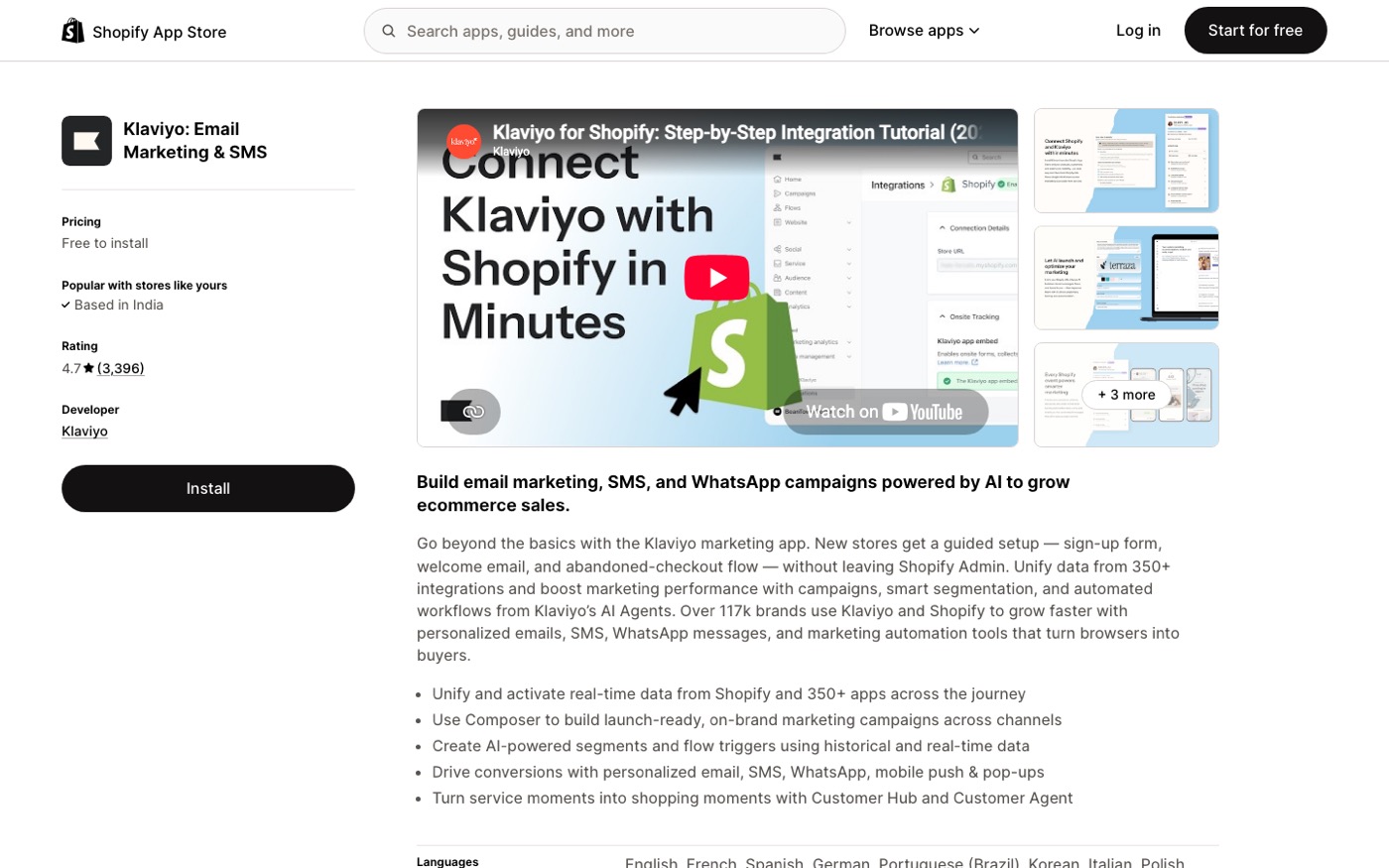
Plumbing first. Before any flow, make sure Klaviyo's onsite script and Shopify integration are properly connected, and that your popup actually feeds your main list. We still audit accounts where the popup collects to a list nobody emails.
Smart Sending on or off? Klaviyo's Smart Sending suppresses emails to people who recently received one. Keep it on for browse and win-back, but consider turning it off for cart abandonment, a cart reminder shouldn't be blocked because someone got a newsletter two hours ago.
One flow, one job. Don't cram cross-sells into your abandoned cart flow or review requests into your welcome flow. Each flow has a moment and a mindset. Respect it.
Desktop-test, then mobile. Most ecommerce email is opened on phones, in dark mode, with images off. Check that your flows read sensibly with images blocked, alt text on product images isn't optional.
Watch your sender address. Use a subdomain (mail.yourstore.com) for marketing sends if you can. It isolates marketing reputation from transactional email, so a deliverability hit doesn't kill your order confirmations.
Frequently Asked Questions
How many emails should each flow have?
Fewer than you think. Our defaults: welcome 4, abandoned cart 3, browse 1, post-purchase 4, win-back 3, sunset 2. More emails add marginal revenue but increase unsubscribes. If a flow's third email contributes under 5% of the flow's revenue, cut it.
Do I need Klaviyo, or is Shopify Email enough?
Shopify Email is fine for a brand-new store sending simple campaigns, and its price is hard to argue with. But its flow logic, segmentation, and Shopify event depth are limited, no serious abandoned-cart splits, weak conditional logic. Once you're doing real volume (or want the flows in this post), Klaviyo is the standard for a reason. Start with Shopify Email if budget is tight, plan to migrate by your first $10K month.
How much revenue should flows generate?
A healthy benchmark: 25–35% of total email revenue from flows, with campaigns taking the rest. If flows are under 15%, your sequences are either under-built or under-tuned. If they're over 50%, your campaigns are neglected. Both matter, but flows are the compounding asset.
When should I add SMS to these flows?
After your email flows are stable and profitable. SMS belongs in welcome (opt-in only, short and punchy) and abandoned cart, where it consistently lifts recovery. Don't bolt SMS onto everything, each text has a real cost and a real annoyance potential. Get explicit consent, keep frequency low, and always include an opt-out.
How often should I update my flows?
Review performance monthly, refresh creative quarterly. Subject lines fatigue first, we rotate abandoned-cart subject lines every 6–8 weeks on active stores. The structure above ages well; the words and offers around it shouldn't.
Get Help With This
If your Klaviyo account is installed but barely earning, you're not alone, it's the most common state we find in audits. Our team builds and tunes these six flows with proper segmentation, mobile-first templates, and revenue attribution you can actually trust. See what our performance marketing service includes, or reach out and we'll audit your current flows for free.
